-Visit us in the Northeast USA at the upcoming show- Northern Forest Products in Bangor, ME on May 17-18.

Straw Bale home with Pellmax pellet boiler

Monday, February 11, 2013
written by admin

Follow this link to a very interesting straw bale house build featuring a heating system including a Pellmax pellet boiler, a Viking Bio burner and a Teknik accumulator tank.


Vedolux 650 Lambda controlled wood boiler

Tuesday, November 20, 2012
written by admin

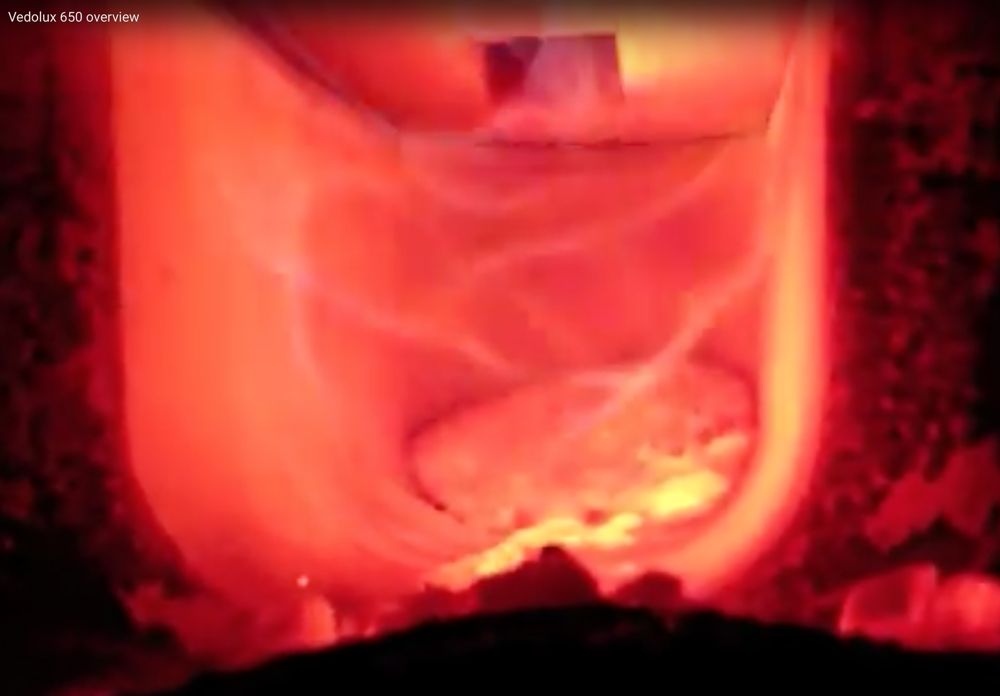
This is a 4 minute video of a Vedolux 650. It shows the boiler under fire, some information that is available from the controller screen and some interior views. enjoy!

here we have a video showing the cleaning and lighting of the Vedolux 650


Install in Studio Barn

Thursday, October 25, 2012
written by boilerman

This install was in a studio barn in New Hampshire. The heat distribution is radiant.

Vedolux 30 install in Maine

Wednesday, October 17, 2012
written by boilerman

Pictures of an install of a Vedolux 30 boiler installation in Maine.

Vedolux 30 and Aqualux accumulator tanks with 9KW electric backup


Domestic water connection to Aqualux CU tank


Aqualux CU heating load connection to 4 way mixing valve.


Taco zone control.


Loading valve and 9KW backup element.


Vedolx 30 package with K2 solar panels

Friday, June 29, 2012
written by boilerman

Here is a Vedolux 30 package that includes 1-750 Teknik solar storage tank and 2- 750 Aqualux ub tanks.

The Vedolux 30 boiler when used with a Teknik solar accumulator tank makes it easy add solar panels to the wood heating system. This allows solar to take care of domestic water needs during the summer months as well as support the wood in heating the tanks at other times.

Here Varmebaronen K2 panels are used.

Taco solar pump system is used to circulate between the coil in the Teknik tank and the panels.

Vedolux 50 with storage tanks

Wednesday, March 21, 2012
written by boilerman

The used propane tanks showing in this video are stacked and used for water storage with a Vedolux 50 natural draft boiler. The video below shows the lighting sequence. There is a draft booster installed in the flue but for this lighting it was not used. The draft booster can be used during lighting if there is a weather system creating a back pressure or otherwise poor draft. The tanks will be fully insulated after the system has been operated for a bit.

With two 500 gallon tanks the 1000 gallons of total water volume is a good fit for the output of the natural draft Vedolux 50. The storage tanks are propane tanks that have been taken from service by the gas company. They are steam cleaned and modifications like ports and legs are added where necessary. The stacked tanks have very good stratification. The radiant floors in the new addition are heated exclusively from the wood system and a primary loop runs over to the oil boiler and becomes the heat source if the tank temperature exceeds 140 degrees.

This natural draft boiler offers downdraft gasification burning without an integrated fan. Because the stack temperatures with the natural draft boilers offered by Varmebaronen need to be about 50-100 degrees higher than their suction fan counterparts the efficiency level for the natural draft boiler is 5-10% lower than the suction fan models. The higher stack temperature is needed to maintain the needed air velocity.

This system is heating an old farmhouse with a new addition somewhere in central PA that was sold through a dealer ThisWarmHouse.

Viking Bio Pellet Burner and Vedolux 50

Monday, February 01, 2010
written by boilerman

This video shows the Viking Bio Pellet burner from Varmebaronen attached to the Vedolux 50 UB natural draft wood gasification boiler.  In the video I show the pellet head operating and the fire.  I also show how fast and easy it is to convert from pellets to wood.  I then demonstrate cleaning the boiler and finally lighting a fire.  Varmebaronen boiler products make alternative heating simple and economical.

Variable Speed Circulators

Monday, January 18, 2010
written by boilerman

Please refer to the Nimbus Manual for specific guidance on configuring your variable speed controller.

Fixed Speed 50

The purpose of using the nimbus control is so the ideal flow rate can be achievable for any circulator in your system. Flow rate is important. A boiler circulator running too slowly can overheat, whereas running too quickly can negatively affect stratification in thermal storage tanks by stirring the hot and cold water.

Using the manual dip switch settings on the nimbus, you can test different speeds in order to determine the best flow rate for transferring heat.

The default settings are with all switches in the off position as seen here.

Default Nimbus Settings

Using the dip switches, you can manually set the controller to a fixed speed. You are able to configure it in one percent increments between 27 and 100 percent output. Please note, we have found most circulators to be unable to work below 40 percent as set on the nimbus control.

Fixed Speed 27

Fixed Speed 50

Using the Nimbus controller in this manner will give you a single user defined speed for most any circulator. Our personal experience is with using the TACO circulators, 007, 0010, 0014 models.

Using Nimbus for True Variable Speed with NFCS

Another way to use the nimbus is in conjunction with a nofossil control system, NFCS, which I have installed at my own home, which can be seen live, here.   The analog out(AO), on the left hand column are the four outputs being controlled with 4-20ma control signal.

The benefit of using the Nimbus with the NFCS is to drive your circulator speeds dynamically based on current heating system temperatures and rule sets. This allows you to have even greater control over your heating system and also run your system at its optimum settings.

In this setup, the output of the Nimbus control is being controlled by the NFCS via a 4-20ma signal. The NFCS connects directly to each specific nimbus controller with a signal wire coming through a variable speed breakout box.

One of the first things you need to do when setting up your variable speed controller to work with NFCS is to configure the jumper so it will work with 4-20ma signal.

Using the manual we can determine how to best set the Nimbus for our system.   This is an example of a configuration, set to run on current control. This example is also to run at 60 percent if no signal is present. Where the manual refers to a "fan", this applies to the circulator in our scenario.

A. Fan On / Fan Off Feature (switch #1): To turn fan(s) off below the set idle speed (see table 3). Set switch #1 to the ON position. To keep fans running at idle speed below the set idle speed, set switch #1 to the OFF position.

B. Idle Speed DIP Switch Settings

C. Control Signal Loss Options (switch#6): If the control signal is lost, (less than 4mA in I mode, less than 2VDC in V mode) when switch 6 is OFF fans will continue to idle or remain off. To send fans to full speed if the control signal is lost, set switch 6 to the ON position.

D.
Setting Control Modes

In the event that the NFCS is offline and not supplying 4-20ma signals, the nimbus can be configured so that it can either run in one of four preselected idle speeds or simply run wide open assuming that the aquastat or other control switch is supplying line voltage to the nimbus.

Connecting a variable speed control unit to the NFCS

Please refer to the Nimbus Manual for specific guidance on configuring your variable speed controller.

EKO 60 Installation

Monday, January 19, 2009
written by boilerman

I purchased my EKO 60 a couple years ago before I began selling boilers.  The EKO 60 that I purchased was actually one of a few boilers that were designed and modified to be used as outdoor boilers.  The company that I bought it from was trying to take on some of the outdoor wood boiler market.  Unfortunately, due to high manufacturing costs, the units couldn't be competitively priced.

These units were built with an insulated stainless frame and roof to house the boiler.  Inside the steel housing, the unit has a 100 gallon tank and circulating pump.  The boiler was designed to be a "plug and play" installation.  All you needed to do was connect the electric and plumbing on the two ports coming out of the 100 gallon tank.

When I first purchased the EKO 60, I used it outdoors for a cold season until I was able to build my barn.   I have installed a 500 gallon storage tank in my basement.  The tank is a used propane tank which was professionally inspected, cleaned and modified to add the plumbing ports. 

This summer I built my barn and replaced the 100 gallon tank that came with the boiler with a 250 gallon insulated tank placed just outside the boiler housing.  The 250 gallon tank is a used propane tank as well.  I had a base ring installed on one of the rounded ends; I did that so I could stand it up and save floor space.

When building the barn last summer, I left an opening the size of the face of the steel boiler housing.  I pulled the boiler flush with the outside wall and installed flashing to seal/connect it to the wood siding.  Having the boiler facing the outside is very convenient; I can load wood without worrying about smoke issues etc.  I can treat it more like I did my outdoor wood boiler with the exception of the dry wood needed for the gassifyer.

A couple of these photos show what it looks like inside the barn.  The one photo shows the boiler enclosure with the insulated removable side panels off.  There are removable panels on the opposite side as well.  The back side of the boiler has doors on it similarly to the front doors.

There is a draft meter mounted on the side wall of the boiler.  I have been experimenting with different draft control as I had lots of trouble with too much draft.  I've learned that without the draft meter (Dwyer Mark II), I wouldn't have known what was going on in relation to my burn variation.  It has helped me to configure my boiler's air mixtures to achieve great burns.

[gallery]

Smokeless Heat, LLC
2020 Cornwall Rd.
Lebanon, PA 17038
Ph: (717)389-0083
Toll Free: (855)-389-0083
Like Us on Facebook
Hours
SunClosed
Mon - Fri8 AM - 5 PM
SatBy Appointment